
Last updated November 23, 2026
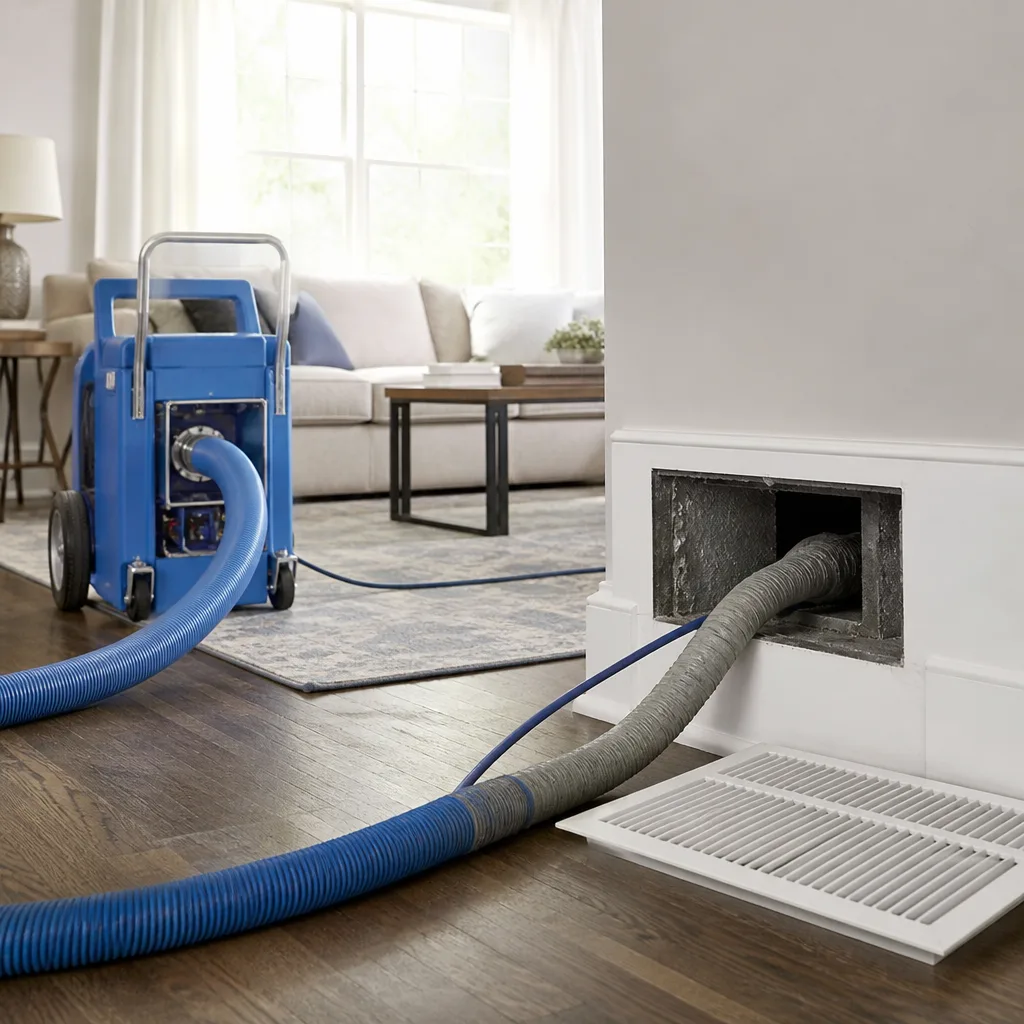 Whole-home duct cleaning
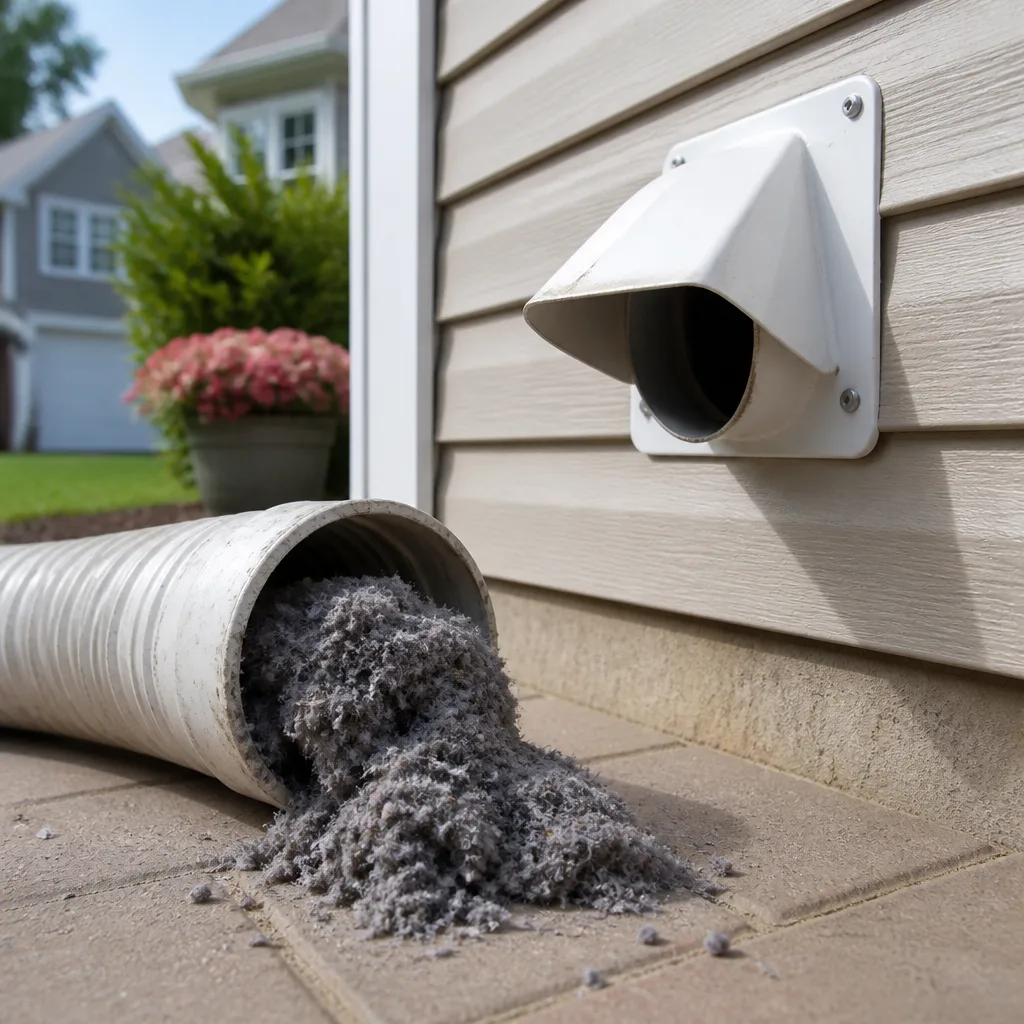 Dryer vent cleaning
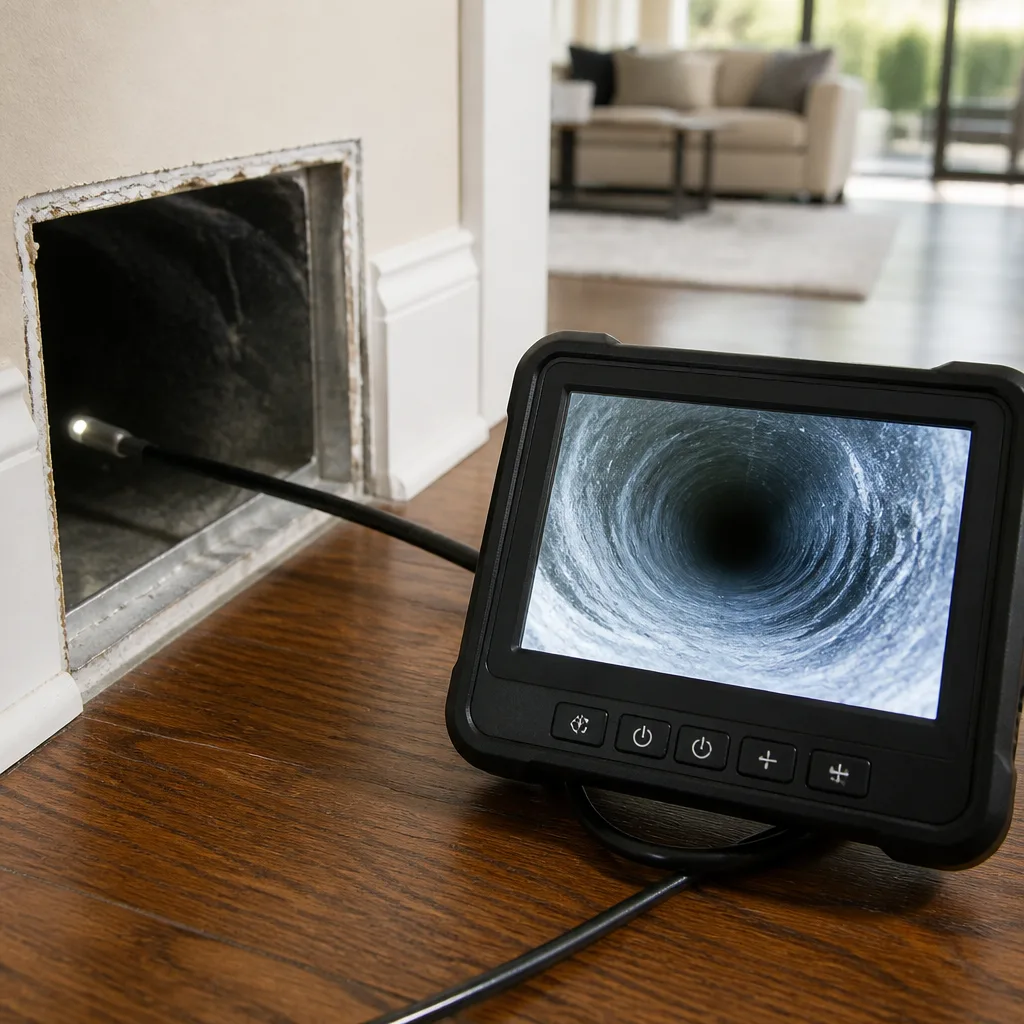 Camera inspection
 Sanitizing & deodorizing
Whole-system duct and dryer vent check with before-and-after photos - you see exactly what came out of your vents
That "$99 whole-house special" is a bait ad - the real number appears once they are in your hallway, or the "clean" is a shop-vac at the register. We photograph the inside of your ducts before and after instead.
Air Duct Cleaning Cost Breakdown: The Fountain Valley Homeowner’s Reference for 2026
A $99 duct cleaning quote and a $650 duct cleaning quote can describe the same service on paper. The gap between them almost never comes down to how dirty your ducts are. It comes down to four line items that low-ball estimates leave out because leaving them out is the only way to hit that headline number: containment and HEPA filtration, real mechanical agitation of the duct walls, access work for the trunk and branches, and a verified before-and-after record of what actually came out. What follows is how we think about pricing in Fountain Valley in 2026, which variables legitimately move a quote up or down, and how to read two estimates side by side so the cheap one reveals itself before you book it.
Quick Answer
Air duct cleaning in Fountain Valley in 2026 typically runs roughly $350 to $650 for a standard single-family home, with larger or multi-zone systems and add-on services pushing the total higher. The single biggest driver of cost isn’t square footage; it’s the number of ducts, the number of access points, and how hard it is to reach the trunk. A flat rate hides those variables, while a cost-per-duct and cost-per-access-point breakdown exposes whether a quote covers your whole system or just the runs the technician can reach from the closest vent.
Styles & brands we work with
- Whole-home duct cleaning
- Dryer vent cleaning
- Camera inspection
- Sanitizing & deodorizing
Table of Contents
- What Actually Drives Air Duct Cleaning Cost
- Which Add-Ons Are Justified and Which Are Upsells
- Fountain Valley Pricing Context vs. Orange County
- How to Compare Quotes by Cost-Per-Duct and Cost-Per-Access-Point
- What a Price That’s Too Low Actually Signals
- Cleaning, Sealing, and the Rest of the System
- What a Proper Job Looks Like Step by Step
- What You Can Realistically Check Yourself
What Actually Drives Air Duct Cleaning Cost
The variables that legitimately affect price are the ones a technician can point to on an inspection walk: how many ducts there are, how much linear footage of trunk and branch runs the system has, how many access points are needed to reach it all, and how the system is configured. None of these are hidden. A fair quote ties a price to each of them. If a quote has no mention of duct count or access work, the price is a guess and the cleaning will be too.
Duct count is the easiest place to start. A home with a compact layout and fewer supply and return registers takes less time than the same square footage with twelve or more runs spread across bedrooms, a hallway, and a kitchen. Pricing by vent count alone can mislead, though, because a long trunk feeding two distant rooms is more work than three short runs off the same plenum.
Linear footage matters because cleaning is a tool traveling through a cavity. The Rotobrush system we use runs a rotating brush assembly through each run at the end of a hose, with commercial-grade suction on the other end. Every additional foot of duct is another foot of travel, and a long interior trunk that ducks behind a hallway wall takes more setup than a short one in the same footprint.
Access point difficulty is the honest hidden cost in Fountain Valley, and it comes down to the local housing stock. A lot of Fountain Valley homes have flex duct in the attic, and some have rigid trunk runs in soffits or chases built into the original floor plan. Reaching those runs means cutting carefully sealed access panels, cleaning from them, and resealing afterward. Homes where access is straightforward price lower than homes where the technician has to open several panels just to reach the far end of the system.
System configuration sets the baseline. A single-zone system with a shared plenum is the simplest case. A multi-zone setup with separate dampers and branches off a common trunk is more work, and a system with attic-mounted air handler and interior trunk legs to reach requires climbing into the attic for one half and cutting panels for the other.
The cost variables, in plain order
- Duct count and register count: the simplest driver of time on a job.
- Linear footage of trunk and branch: affects tool travel and setup, not just labor.
- Access points needed: the biggest variable not on a low-ball quote.
- System configuration: single-zone versus multi-zone, attic-mounted versus interior.
- Condition at inspection: heavy debris, pest evidence, or disconnected runs that need to be repaired before cleaning can start.
We treat the system, not just the surface. A price that ignores configuration or configuration-related access is not really a cleaning; it’s a vacuum pass over the easy runs. The line items above are also the ones to ask about by name on any quote you receive, because a contractor who can explain them to you knows the job. If you want a more detailed walkthrough of the cleaning process itself, our page on air duct cleaning covers what happens at each stage.
Which Add-Ons Are Justified and Which Are Upsells
Add-ons belong on a quote only when the inspection walk finds a specific reason. Dryer vent cleaning is justified when the dryer vent run is long, has visible lint buildup, or has a damper that no longer closes. Sealing is justified when the inspection turns up gaps where branches connect to the trunk or where access panels were cut. What should never happen is being told on the phone that you need the full add-on menu before anyone has looked at the system.
Dryer vents are their own conversation, and we handle them as a standalone service. A residential dryer vent run is much narrower than an HVAC duct and collects lint along the walls of the whole run, not just at the termination hood. If your dryer is taking longer to dry a load, the lint buildup in the vent is the first thing to check, and the second is the condition of the vent itself. You can read about the tools and process on our dryer vent cleaning page.
Coil treatment is justified when the evaporator coil on the air handler has visible buildup of dust, lint, or microbial growth on its fins. It’s not justified as a rule on every job; a coil that’s clean doesn’t need treatment, and a quote that includes it unconditionally is bundling rather than diagnosing.
Antimicrobial application is justified when the inspection finds evidence of moisture or microbial growth in the duct, typically in a flex run that has picked up condensation from a nearby bath vent or a roof-line leak. It’s not a routine upsell. The product we offer, Guardsman protective treatments, is applied only after cleaning and only when the inspection finding warrants it. Applying an antimicrobial to a clean, dry system that doesn’t need it is the classic unrelated add-on.
Sanitizing and surface protection sits alongside the antimicrobial step and is meant to keep the system from regaining the same condition quickly. If the inspection finds heavy debris and organic growth, sanitizing is warranted. If the system is simply dusty, the cleaning plus sealing will do more to keep it clean than a coating will.
- Justified when the inspection finds it: dryer vent cleaning for long or lint-plugged runs, coil treatment for soiled fins, antimicrobial for moisture-driven growth, sealing for gap or disconnect findings.
- Not justified as a rule: coil treatment on a clean coil, antimicrobial on a dry system, sanitizing without a why.
- Only as an upgrade after the fact: Aprilaire and Honeywell air quality products. We can recommend and install whole-home filtration or humidity control, but it’s a decision for after the cleaning, not a line item on the first estimate.
If a quote arrives with add-ons already attached and the technician can’t tell you which inspection finding drives each one, that’s the moment to ask. A real add-on has a reason attached; the rest are padding.
Fountain Valley Pricing Context vs. Orange County
Fountain Valley sits in a sweet spot for pricing in 2026: a bit below coastal cities like Huntington Beach and Costa Mesa because the drive and overhead are different, and roughly in line with or slightly above inland cities where the housing stock is older. The bigger factor than geography is the equipment overhead on the job, and that overhead doesn’t shrink just because a quote is low.
Labor rates in Fountain Valley are set by the Orange County market. The technicians who do this work well are the same ones servicing HVAC fleets across the county, and those crews don’t get cheaper by traveling a few miles south. A quote that assumes they do is either a different technician than the one you actually want in your attic or a job that won’t get the time it needs.
Service density matters because a fair share of the county’s duct cleaning volume happens in and around Fountain Valley, so scheduling is generally easier than in more remote parts of the county. That is a scheduling convenience, not a price discount; the equipment, the HEPA filtration, and the time on the job are the same as anywhere else in the county.
Equipment overhead is the piece that most homeowners never see on a quote, and it’s what separates a real job from a vacuum pass. Our setup includes a Rotobrush duct cleaning system, Nikro commercial-grade suction and containment, and Abatement Technologies HEPA-filtration units that filter air to the same negative-air standard used in mold and hazardous-material abatement work. That equipment has to be on the job, set up in your driveway and at your plenums, and running the whole time the cleaning is happening. A quote that can’t afford to run it can’t be covering the system you have.
What the Fountain Valley market supports in 2026
The typical price band in Fountain Valley lands between roughly $350 and $650 for standard single-zone residential work. That band assumes a system with typical duct counts and reasonable access. Where it moves up is where the configuration gets more involved: multi-zone systems with separate dampers, attic-mounted trunks, or homes where accessing the far end of the trunk requires careful panel work. Where it moves down is where the system is compact, the access is easy, and the inspection finds only normal dust. Your written estimate sets the final price, not a phone quote.
One local consideration with real cost implications is the mix of flex and rigid duct in Fountain Valley homes. Older flex runs that have begun collapsing or that picked up moisture from a bath vent can sag or come loose from their collars. When the inspection finds a run that’s no longer connected to the register boot, cleaning has to stop and a repair has to happen first. We offer duct repair and sealing as a standalone service for exactly this reason; a cleaning on top of a disconnected run is wasted money.
How to Compare Quotes by Cost-Per-Duct and Cost-Per-Access-Point
Comparing quotes by headline number is the source of most of the confusion in this trade, because the numbers rarely describe the same scope. A more useful comparison is two converted figures: cost-per-duct and cost-per-access-point. Pull those two out of every quote you receive and the pricing logic becomes visible in one line.
Here’s how to do the conversion, step by step:
- Count your supply and return registers. Walk the house and write down every supply vent on the floor, wall, or ceiling, plus every return grille. That’s your duct count for comparison purposes.
- Ask each contractor how many access points the quote includes. Some will say “as many as needed,” which is not an answer. Ask for a number. A real quote names the access panels the technician will cut or open.
- Divide the quote by the duct count. That’s the cost-per-duct. Do the same for access points.
- Compare quote-to-quote on both figures. Two quotes of $400 and $600 are not comparable if the $400 covers eight ducts and the $600 covers fourteen. The cost-per-duct reveals which is actually cheaper per unit of work.
- Check what the quote says about containment, filtration, and before-and-after photos. These are the fixed costs a low quote leaves out. If they’re missing from the written scope, add them back in mentally and re-compare.
The practical result of that exercise is usually that the $99 quote and the $650 quote are not the same service at different prices. They’re different services at different prices, and the one that covers your whole system at a fair rate is the one you actually want.
If you want to see how we structure the estimate before you start calling, our Fountain Valley Air Duct Cleaning page lays out what a proper written scope looks like. The estimate itself is free, and the written scope is what both sides agree to. Call (855) 658-3999. We answer 24/7. Fast dispatch from 7am to 7pm, Sunday through Friday.
What a Price That’s Too Low Actually Signals
A price that’s too low signals one thing almost every time: something in the scope had to come out to make that number possible. That something is usually equipment, insurance, or technician certification, and it’s the reason the crew can finish the job in half an hour instead of half a day.
Equipment. The brands we use are the ones HVAC contractors recognize on a job site. Rotobrush physically agitates the inside of each duct with a rotating brush assembly. Nikro provides commercial-grade suction and containment so the debris is captured, not just loosened. Abatement Technologies HEPA filtration is a negative-air setup borrowed from the mold and hazardous-material remediation trade, and it’s the reason a proper cleaning doesn’t leave a fine haze of dust settling back over the house. That equipment costs more to buy, maintain, and run than a shop vac strapped to a hose. A quote that can’t afford the equipment isn’t running the equipment.
Insurance and liability. Duct cleaning takes place inside walls, under floors, and in attics. A technician on a tall ladder with a high-reach brush is a liability event waiting to happen, and a contractor who is carrying actual coverage is paying for it every month. A quote that undercuts the market by a wide margin may reflect a contractor who has priced the work without that overhead behind them. Before you book, ask for the certificate of insurance and confirm it names the right entity. If the answer is a story rather than a document, that’s the answer.
Technician certification and training. Proper duct cleaning is a skill. The Rotobrush system rewards a technician who knows when to change brushes, when to slow the tool down, and how to read the change in suction as the run gets lighter. Our technicians have up to 9 years of experience with this equipment, and that experience is what lets a proper job take less time and get better results than an inexperienced crew with better marketing. A quote so low it can only pay for an untrained technician on their first job is not a bargain.
Verification. A proper cleaning produces before-and-after photos of the ducts themselves, from the same access points. That’s the answer to the question “how do I know the work was actually done?” It’s also a fixed cost a low quote can’t cover. The photograph that shows what came out of your system costs money to capture, catalog, and deliver to you, and it’s the record that makes the cleaning real.
None of that is a reason to distrust every low quote. It’s a reason to look past the number at the scope behind it. When you do, the quote that actually covers your Fountain Valley home will usually sit in the same band whether you call us or any other contractor who’s running the right equipment.
Cleaning, Sealing, and the Rest of the System
Cleaning the ducts is only half the job. The other half is sealing the gaps and disconnects the cleaning turned up, so the system stays clean after the technician has gone. That’s the step most duct cleaning companies skip, and it’s the reason a cleaning that looked thorough in March can look undone by autumn.
Why sealing matters. In a typical Fountain Valley home, duct runs connect to the trunk with collars, tape, and mastic at the joints. Over years, some of those connections loosen or the tape fails, and behind them the air handler is pulling in attic air. That air carries the fine dust and fiber that settle out on the inside of the runs, and no amount of cleaning reaches it if the source stays connected. Duct repair and sealing closes those gaps. We offer it as a standalone service because it is a standalone service, not a footnote on a cleaning invoice.
Clean it. Seal it. Keep it clean. That’s the order we recommend because each step makes the next one work. A cleaning on a leaking system will need to be repeated sooner than a cleaning on a sealed system. A seal on a dirty system just holds the dirt in. Doing both in one visit is the practical version of that sequence, and it’s what we deliver when the inspection finds the need.
The rest of the ecosystem. Airflow in a home doesn’t start and end at the duct runs. Dryer vents, the air handler, the coil, the blower wheel, and the supply and return plenums are all part of the same system, and each one is its own piece of work. We cover all of them: residential air ducts, dryer vents, HVAC cleaning, air sanitizing, and duct repair and sealing. One call covers every part of your airflow, which means the estimate you receive can price the whole job rather than just the ducts.
If the inspection shows the coil and blower wheel are soiled, that work belongs on the same estimate, not as a separate appointment. Our page on HVAC cleaning covers what that involves and why it matters for system performance. And if the home has an old or tired filtration setup, we can recommend and install products from the Aprilaire and Honeywell lines so the system has a better chance of staying clean between visits.
Air quality you can measure, not just feel, is what the Aprilaire and Honeywell products are for, and Abatement Technologies HEPA filtration is what makes the cleaning itself measurable. Filters at the return grille, humidity control at the air handler, and a clean duct system underneath all of it are how the whole system works together.
What a Proper Job Looks Like Step by Step
A proper job has a predictable shape, and knowing the shape is how you tell the real thing from the vacuum pass. Here’s the sequence a professional-grade cleaning follows from the driveway to the final walk-through.
- Inspection walk. The technician counts registers, checks access points, identifies the trunk and branch layout, and notes any findings that change the scope. Any add-on on your estimate traces back to a finding on this walk.
- Containment setup. HEPA filtration is positioned at the working plenum, and the negative-air setup is running before any brush goes into a duct. This is what captures fine particulates rather than letting them move around the house.
- Access panel work. The technician cuts or opens the panels needed to reach the trunk and branches. Panels are resealed afterward, so the system is no worse sealed than it started.
- Mechanical agitation. The Rotobrush system runs a rotating brush assembly through each run. The brush agitates the wall of the duct, and commercial-grade suction from the Nikro equipment pulls the loosened material into containment.
- HVAC-side cleaning. The blower wheel, coil, and plenum surfaces are cleaned as part of the system, not as an afterthought. A clean duct system with a soiled blower wheel is a system with a problem.
- Add-ons as warranted. Dryer vent cleaning, coil treatment, Guardsman antimicrobial application, and sanitizing are applied only where the inspection found the need.
- Repair and seal. Gaps at collars, panels, and disconnects are sealed. Disconnected or collapsed runs are reconnected or replaced so the system is actually closed when the technician leaves.
- Before-and-after photos. The technician delivers photos of the ducts from the same access points before and after cleaning, so you can see what came out and what’s now there.
- Walk-through. The technician shows you what was done, answers questions, and hands over the record. The written estimate and the final result should agree.
The whole sequence is what the estimate covers. If your quote skips a step, the price that came out of it is short one step’s worth of labor and equipment, and your home pays the difference later.
What You Can Realistically Check Yourself
You can inspect the outside of your duct system well enough to know whether it’s worth calling for an estimate. What you can’t inspect well enough is the inside of the runs without the equipment to reach them, and the honest answer for anything past the register grille is to have a professional look.
Here’s what a casual walk can tell you. Look at the return grille on the air handler side and see whether the filter is clean and correctly sized. Look at the supply registers in each room for visible dust, and if you can reach the register boot, look at the joint where the flex run connects to it. If you can see slack or a visible gap, that’s a repair that belongs on the estimate. Do the same for the dryer vent: check the termination hood outside and confirm the flap opens freely when the dryer is running.
Here’s where the safe check stops. Anything past the register grille is the inside of a duct. Reaching the trunk or the plenum takes cutting access panels or opening the air handler cabinet, and both of those steps carry real risk if a wire, gas line, or condensate drain is in the way of a saw or a drill. The air handler specifically includes electrical connections and, on a gas-fired furnace, the gas train. That’s a professional’s work, not a homeowner’s.
The same logic applies to the attic. A technician who does this every day knows where to step and how to work around flex runs that will tear if you put a knee on them. The right move is to leave the inspection of the inside of the system to a trained professional and use your own walk to figure out whether the outside signs warrant the call.
Common Mistakes to Avoid
- Comparing quotes by headline price only. A $99 and a $650 quote can describe different services. Convert both to cost-per-duct and cost-per-access-point before you compare. The $99 quote usually covers far fewer ducts.
- Booking an add-on bundle before anyone has looked at the system. Dryer vent cleaning, coil treatment, and antimicrobial application are justified by a finding on the inspection walk. If a quote arrives pre-loaded with all three before anyone has been in your attic, that’s a bundle, not a diagnosis.
- Stopping at cleaning and skipping the sealing step. A cleaning on a system with loose collars and disconnected runs will need repeating. Duct repair and sealing is what keeps the cleaning from being undone, and it’s the step most companies skip.
- Assuming attic access is always easy. A good share of Fountain Valley homes have flex runs in the attic and rigid runs in soffits. How reachable those runs are affects the honest cost of the job. A quote that ignores that is guessing.
- Skipping the insulation and filter check. A clean duct system behind a clogged or undersized return filter, or with torn insulation lining a run, will soil again quickly. These belong on the same scope as the cleaning, and leaving them off makes a proper cleaning shorter and a low quote cheaper.
- Not asking for the before-and-after photos. The photo record is the answer to “how do I know the work was done?” If a contractor can’t deliver it, the report you receive is a receipt, not a record.
- Assuming a cheap quote means a good deal. The equipment, filtration, insurance, and technician experience behind a professional job have real costs. A quote that undercuts them by a wide margin is a different service, not a discount.
See the difference
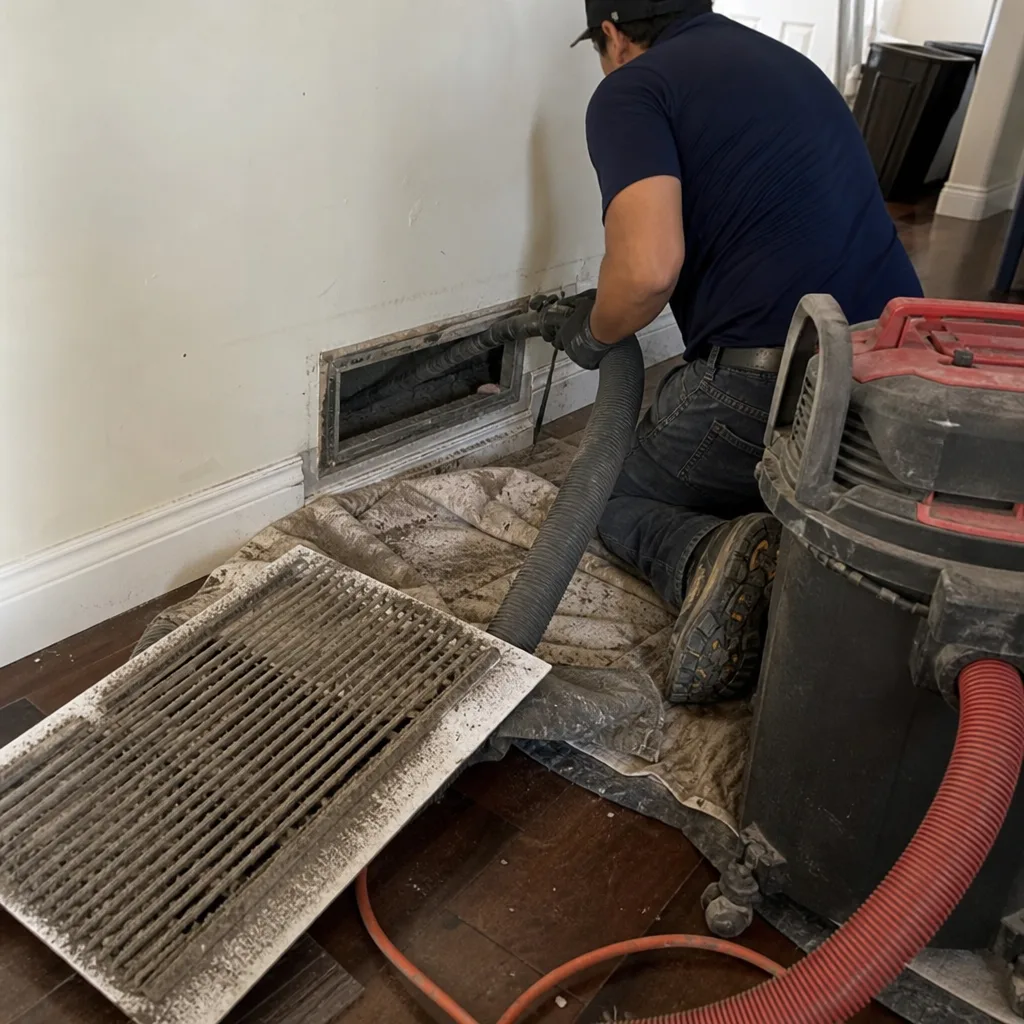 Before
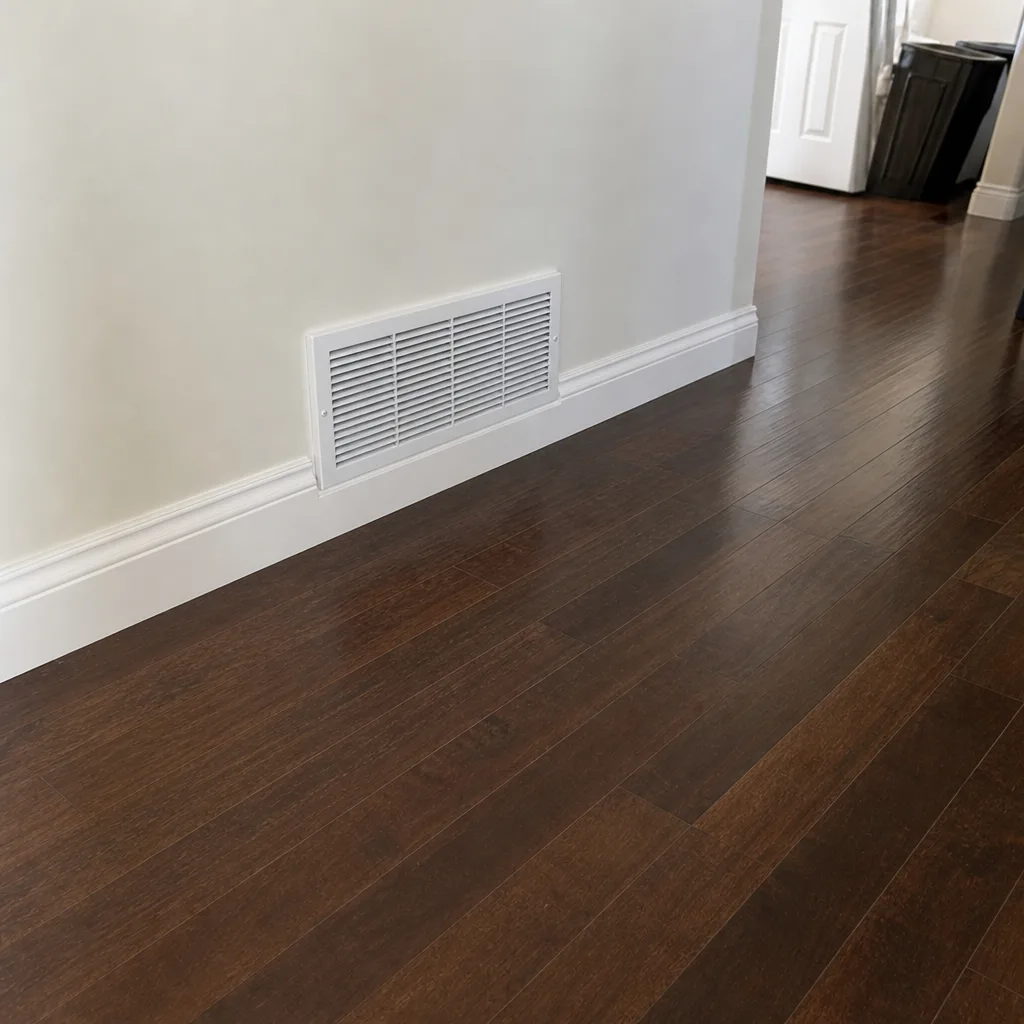 After
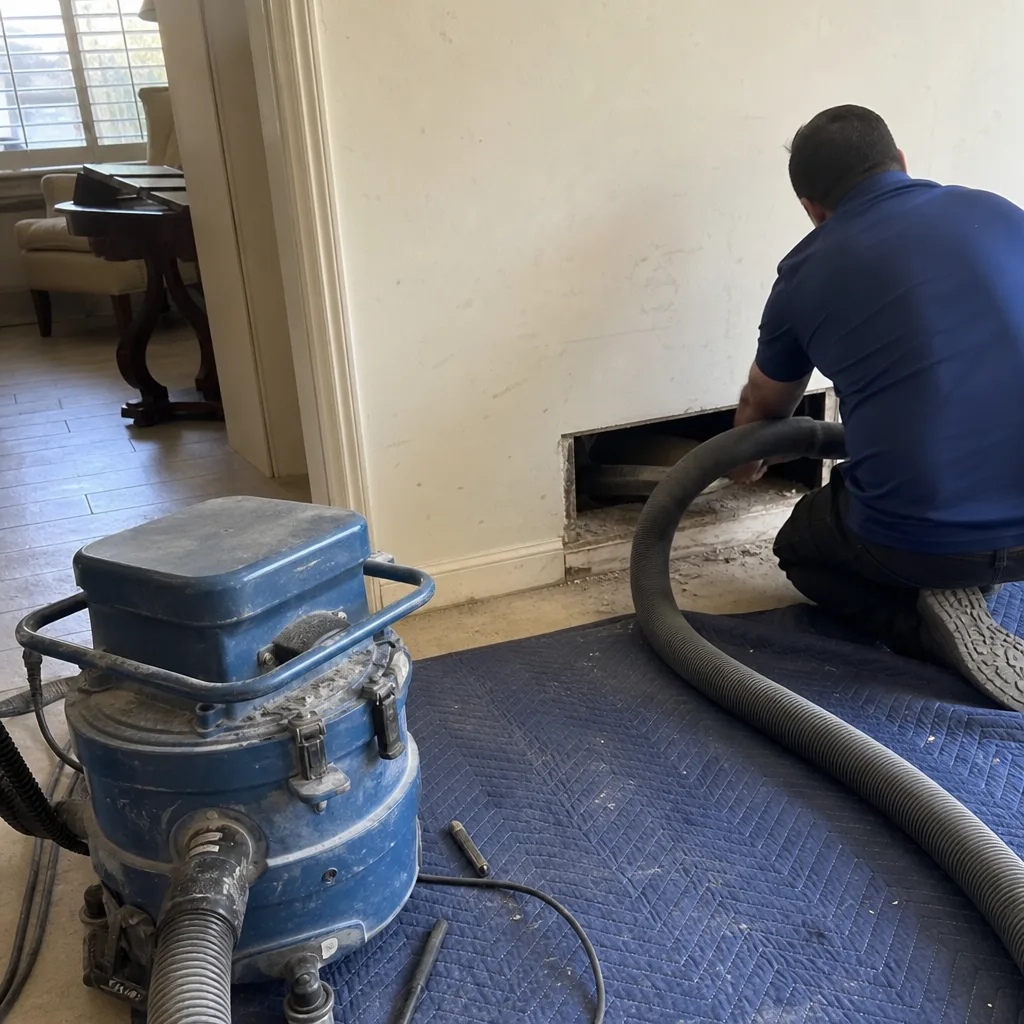 Before
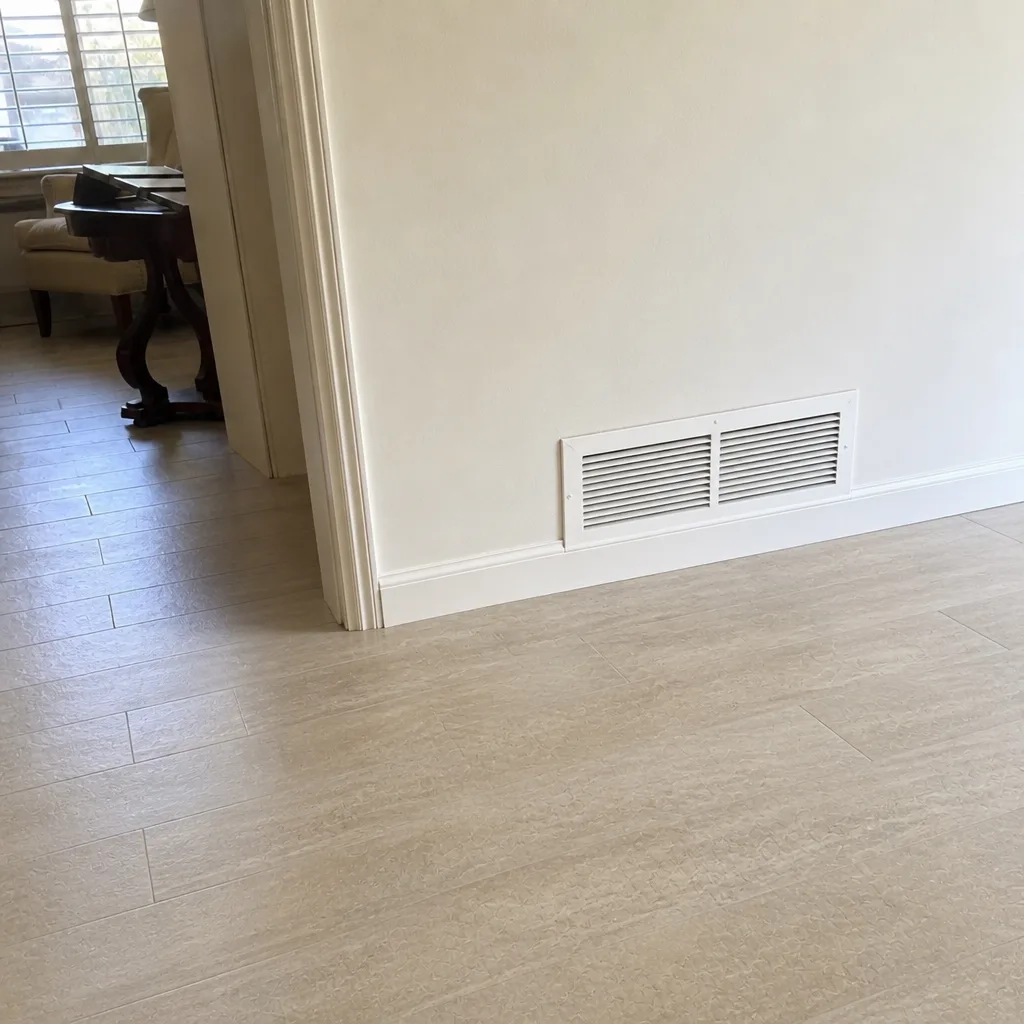 After
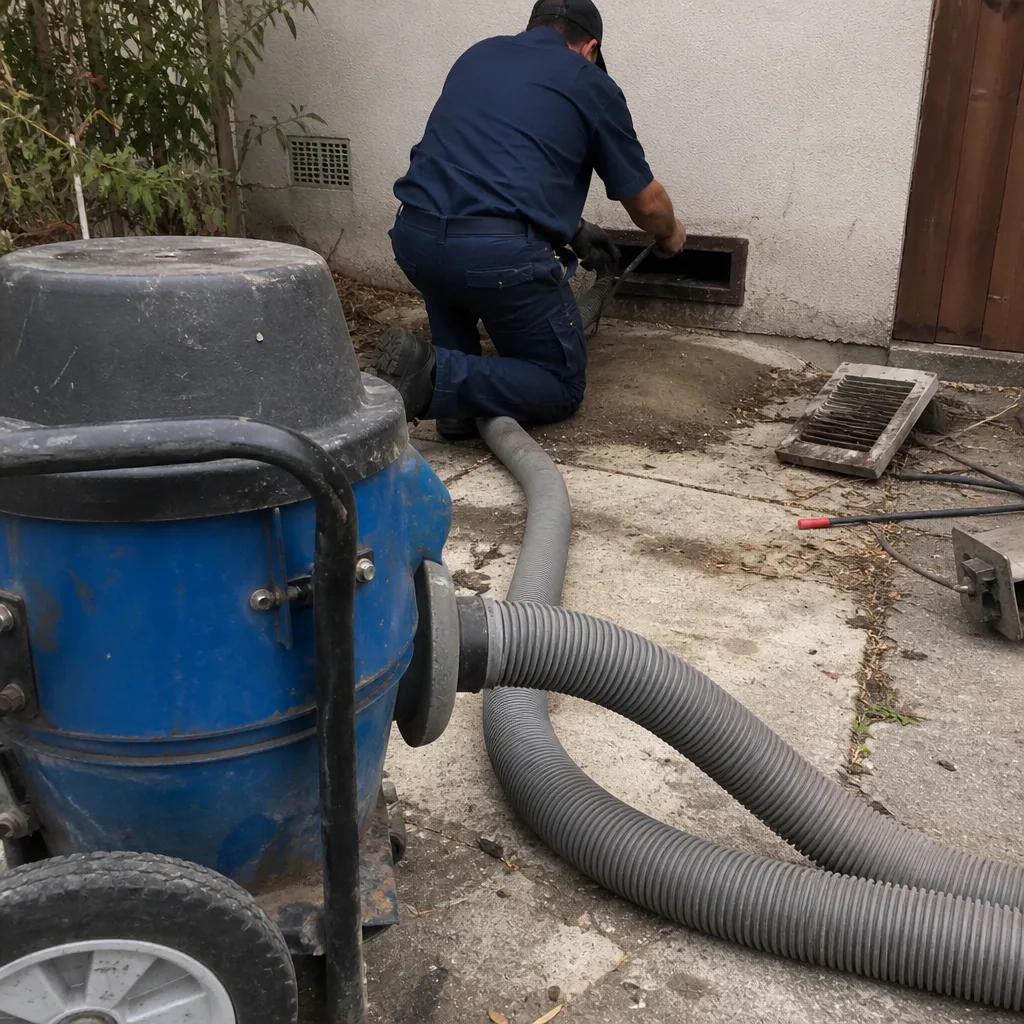 Before
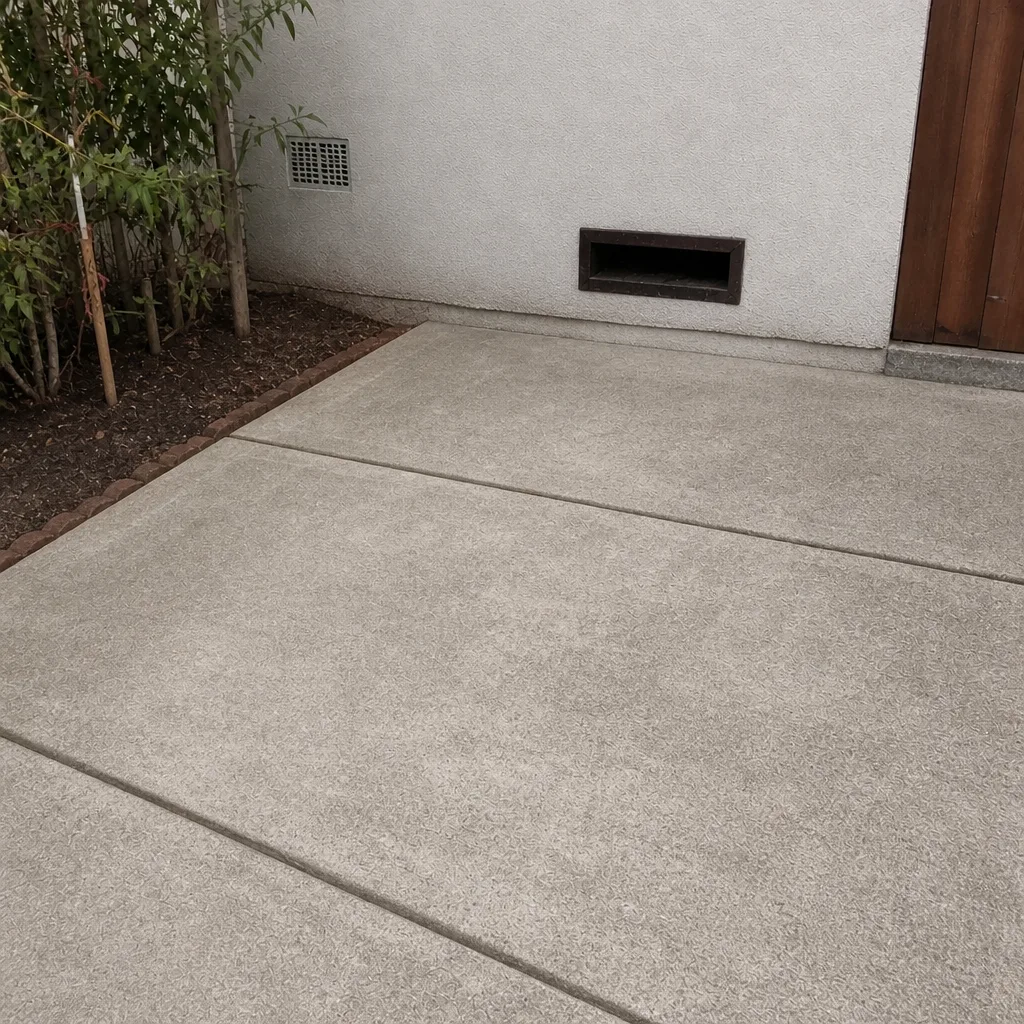 After
When to Call a Professional
Call when you notice the duct-system symptoms that a walk around the house can’t explain on its own: visible dust settling on furniture soon after cleaning, a musty smell that comes back whenever the air handler runs, or a dryer that takes noticeably longer to dry a load than it should. Call if the system has never been cleaned and the home is older than a decade, or if the inspection on the outside shows torn insulation at a register or a slack connection that’s obviously come loose. Call if you’re converting a system, adding a zone, or moving in after remodel work that filled the ducts with construction dust. Any one of those is worth an inspection, and none of them require guessing at what the inside of the system looks like.
Fountain Valley Air Duct Cleaning offers free estimates in Fountain Valley and the surrounding area. Call (855) 658-3999. We answer 24/7. Fast dispatch from 7am to 7pm, Sunday through Friday. The estimate is free and the price is set per job by the written scope, so you know exactly what you’re paying for before the work begins.
Frequently Asked Questions
Air duct cleaning in Fountain Valley typically costs roughly $350 to $650 for a standard single-family home in 2026, with larger or multi-zone systems and add-on services priced higher. The final number depends on duct count, linear footage, access difficulty, and system configuration. Call (855) 658-3999 for an exact quote; estimates are free.
Cheap quotes are cheaper because a portion of the scope was left out, usually HEPA containment, mechanical agitation, access work, or the before-and-after photo record. What remains is a vacuum pass over the easy runs, not a cleaning of your whole system. The comparison that matters is cost-per-duct and cost-per-access-point, not the headline number. Call (855) 658-3999 for a written scope you can compare line by line; estimates are free.
Ask for before-and-after photos of the ducts taken from the same access points, and ask for the written scope the work was priced against. A proper cleaning produces a photograph record of what came out of the system. If a contractor can’t produce that record, the cleaning is a receipt, not a documentation of the work. Call (855) 658-3999 if you want a quote that includes the photo record; estimates are free.
Most homes don’t need annual cleaning. A reasonable interval is every three to five years for a system with normal dust loads and a properly functioning filter, and sooner if you’re in a newer-home purchase, a remodel, or you have pets or allergy symptoms that track with the HVAC running. The right answer is set by the inspection, not a schedule. Call (855) 658-3999 for an inspection-based estimate; estimates are free.
Not more; Fountain Valley pricing in 2026 typically sits a bit below the coastal cities and roughly in line with inland cities in the county. The bigger driver of the price is the equipment overhead on the job, not the address. Ask any quote what equipment is coming, whether containment is included, and how many access points it covers. Call (855) 658-3999 for a Fountain Valley estimate; estimates are free.
Only if the inspection walk turns up a reason: a long vent run, visible lint buildup at the termination, or a dryer that’s taking longer to dry a load. Dust reduction and lint are related but distinct problems, and the dryer vent has its own tools and scope. Bundling it is only worthwhile when it’s actually warranted. Call (855) 658-3999 and we’ll walk through the dryer vent run at the same visit; estimates are free.
The Bottom Line
Width of your home doesn’t set the price of a duct cleaning; the scope does. The four line items a low-ball estimate leaves out are HEPA containment, real mechanical agitation, access work for the trunk and branches, and the before-and-after record. Convert any quote to cost-per-duct and cost-per-access-point, ask what equipment and containment are coming on the visit, and require a written scope you can hold both sides to. In Fountain Valley in 2026, the honest band is roughly $350 to $650 for standard residential work, with the exact number set by the written estimate. The written estimate sets the final price, too.
Fountain Valley Air Duct Cleaning offers free estimates in Fountain Valley. Call (855) 658-3999. We answer 24/7. Fast dispatch from 7am to 7pm, Sunday through Friday.
Written by the team at Fountain Valley Air Duct Cleaning.