
Last updated November 23, 2026
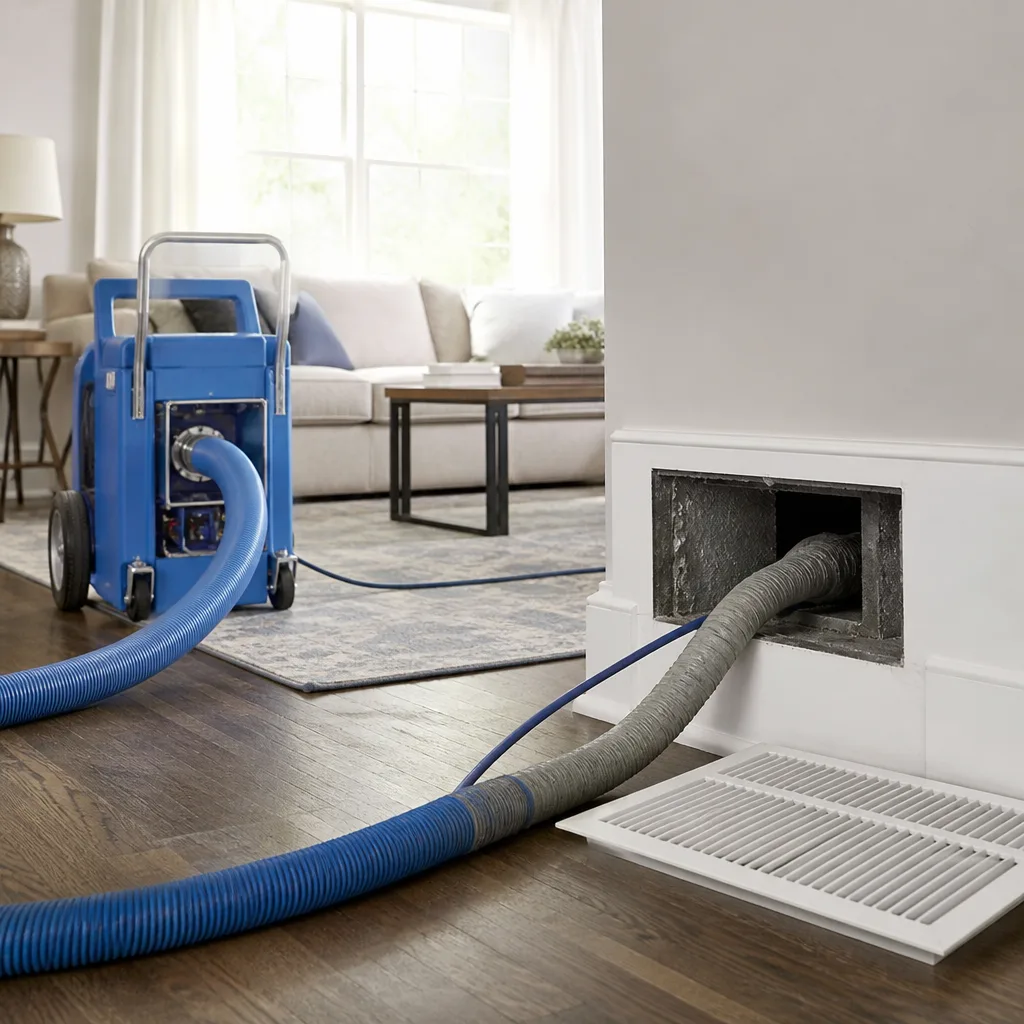 Whole-home duct cleaning
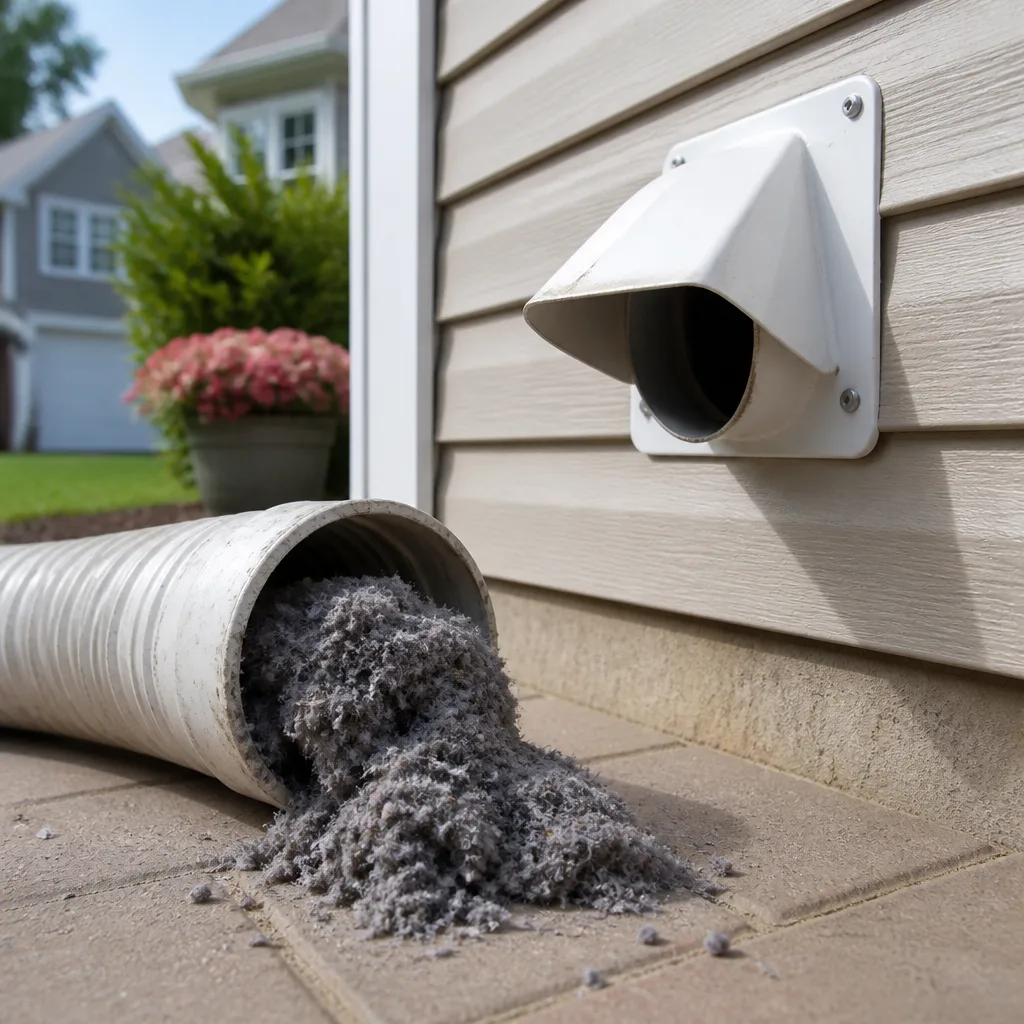 Dryer vent cleaning
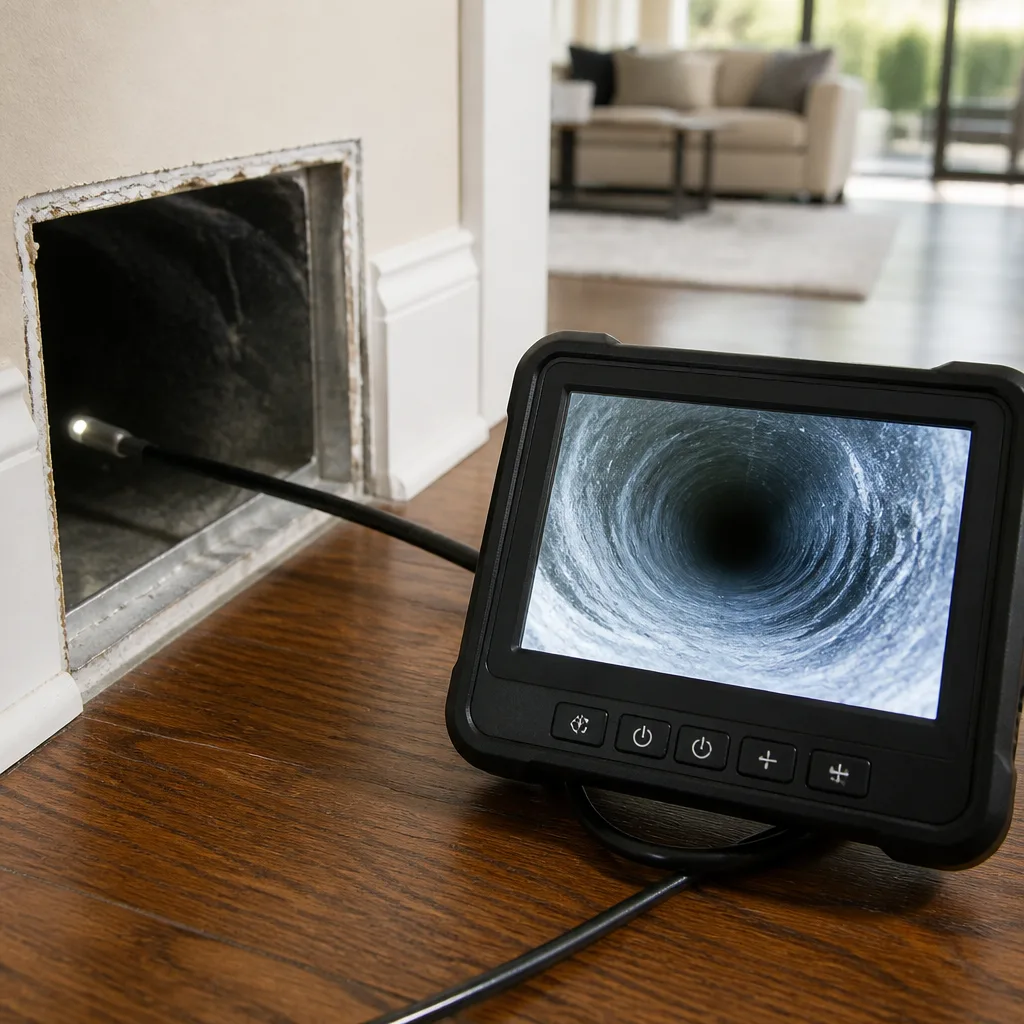 Camera inspection
 Sanitizing & deodorizing
Whole-system duct and dryer vent check with before-and-after photos - you see exactly what came out of your vents
That "$99 whole-house special" is a bait ad - the real number appears once they are in your hallway, or the "clean" is a shop-vac at the register. We photograph the inside of your ducts before and after instead.
The Complete Guide to Air Duct Cleaning in Fountain Valley
Most people assume duct cleaning is one machine and one pass. In practice, a proper full-system clean involves three separate pieces of equipment, applications that go far beyond vacuuming, and work at six distinct zones of the duct system. That gap between expectation and reality is exactly why so many households book a company that shows up with a shop vac and a coupon, then wonder why the dust returns in a month. In this guide we walk through the actual equipment sequence a trained technician follows, explain why Fountain Valley homes present their own airflow challenges, and show you how to read a scope of work so you can tell a full-system service from a surface-level blow-out before you sign anything.
Quick Answer
Air duct cleaning in Fountain Valley means using contractor-grade systems (negative-air machines, rotary brushes, and HEPA filtration) to agitate and remove debris from the entire duct network: supply runs, the return plenum, the air handler, and the registers. A legitimate full-system clean also includes verifying airflow afterward and, ideally, sealing the leaks that let new dust back in. Anything that skips the return side or treats compressed air as a cleaning method isn’t a full-system clean.
Styles & brands we work with
- Whole-home duct cleaning
- Dryer vent cleaning
- Camera inspection
- Sanitizing & deodorizing
Table of Contents
- How a Full-System Duct Clean Actually Works
- The Equipment Sequence: Negative Air, Rotary Brush, HEPA
- Why Fountain Valley Homes Have Their Own Particulate Profile
- Supply vs. Return: Why Skipping One Leaves Half the System Dirty
- What a Legitimate Post-Clean Inspection Looks Like
- How to Read a Technician’s Scope of Work
- Duct Repair and Sealing: The Step Most Companies Skip
- Dryer Vents and HVAC Cleaning: Same System, Different Jobs
How a Full-System Duct Clean Actually Works
A full-system clean moves from the air handler outward in a controlled sequence, and every step depends on the one before it. The technician starts by setting up containment so that loosened debris enters the vacuum before it can enter the living space. Once negative pressure is established, the mechanical agitation begins. That order matters. If you agitate before you contain, you’re spreading dust through the house instead of removing it.
Here’s the general flow we follow on a residential job, explained as a process rather than a do-it-yourself set of instructions:
- Access and inspection. Registers and vent covers come off. The technician checks the air handler and coil area, looking for visible debris, moisture, or signs of pest activity, and locates any disconnected or collapsed runs.
- Containment setup. The vacuum source connects to the main trunk line and a HEPA-filtered negative-air machine draws the system under pressure, pulling air and debris toward the containment point.
- Agitation of supply runs. A rotary brush system travels each branch line, breaking debris loose from duct walls while the vacuum carries it away.
- Return-side and plenum cleaning. The return ducts and the return plenum get their own dedicated pass, because debris load here is often heavier than on the supply side.
- Air handler and blower area cleaning. The component where all ducts meet tends to collect what falls out of the air stream. It gets cleaned separately.
- Sanitizing and protection. After the mechanical work, a sanitizing treatment kills surface microbes and a protective coating can slow future buildup. Guardsman treatments are commonly used for this step.
- Reassembly and verification. Access holes get sealed back to the system standard, covers return, and the technician runs the system to verify airflow at the registers before leaving.
Two of those steps (containment and verification) are what separate a real clean from a visit where the technician sweeps a brush down a vent and calls it done. If a company can’t explain its containment method before it starts, ask why.
The Equipment Sequence: Negative Air, Rotary Brush, HEPA
The tools a technician brings tell you what kind of job they plan to do. A truck-mounted or portable vacuum alone is a capture tool. A rotary brush alone is an agitation tool. Neither one cleans a duct system. Used together, though, they form a system: one loosens debris off the duct walls, the other pulls it out of the airflow, and a third stage filters the air that passes through the vacuum so fine particles don’t get recirculated into the house.
This is why the brand of equipment matters more than most homeowners expect. We use Rotobrush duct cleaning systems for the agitation and extraction work because they’re built for in-duct operation. Nikro professional equipment handles the commercial-grade suction and containment side. Then there’s Abatement Technologies HEPA filtration, which is the same negative-air standard used in hazardous-material abatement work. That pairing is standard practice on a full clean.
Why the three tools have to work in sequence
- The vacuum establishes the pressure direction. Everything downstream moves toward the containment point.
- The rotary brush generates the loose debris. Debris that has bonded to duct walls doesn’t come off with suction alone.
- The HEPA stage captures what the vacuum’s main filter can’t. Fine particulates stay out of the airstream that exits the system.
Notice what isn’t on that list: compressed air. A compressor can loosen debris, but if there’s no negative pressure pulling it away, it relocates into your living room. When a technician’s scope mentions “air sweep” without a containment or vacuum step ahead of it, you’re not getting a clean. You’re getting a redistribution.
If your system also includes a clothes dryer, the same logic applies. The dryer vent cleaning we perform uses containment as the starting point, not an afterthought, because dryer exhaust contains both lint and lint-bound moisture that will not simply blow out the roof cap without agitation.
Why Fountain Valley Homes Have Their Own Particulate Profile
Not every Southern California duct system collects the same stuff. Fountain Valley sits close enough to the coast that its daily temperature swing and marine air movement shape how residential airflow behaves. We’re cautious about sweeping claims here, but two patterns show up often in this area:
- Morning condensation cycling. Coastal-influenced air arrives when the outdoor temperature is often much lower than during mid-day. That cycle of cooler mornings and warmer afternoons can pull humidity into the outdoor-facing parts of the system and the air handler enclosure, which affects how dust and debris bond to duct surfaces.
- Fine-particle loading from regional air movement. Airborne particles that travel inland from the coast tend to be smaller. They pass through standard filters more easily and settle deeper in return runs and plenum areas, which is one of the reasons the return side often looks worse than the supply side in this part of Orange County.
None of that means Fountain Valley homes need a different clean than an inland house. It means the clean should reflect what the system actually holds, and that’s why the inspection step has to come first. A technician who follows a fixed script regardless of what the filters and returns show you isn’t inspecting. They’re executing a template. Our technicians have up to 9 years of experience with this kind of system-level work, and the value of that time is mostly in pattern recognition: knowing what a badly sealed return plenum looks like before taking a single panel off.
What this means for older Fountain Valley homes
Residential neighborhoods around Ellis Park and Mancini Park, and the older stretches of single-family housing off Brookhurst, tend to have duct systems that were designed decades ago for a different era of home performance. Sealing technology has moved on. That’s why we treat duct repair and sealing as a standalone service and not a tack-on. If a return run pulls cellar air or attic air through a gap into the living space, cleaning won’t fix the underlying pressure imbalance. Sealing does.
Supply vs. Return: Why Skipping One Leaves Half the System Dirty
A house has two duct networks moving air in opposite directions. Supply ducts push conditioned air into rooms. Return ducts pull air back to the air handler. The return side is where the heaviest debris tends to accumulate because it pulls in unfiltered air from living spaces first. If a clean only touches the supply side, the return runs keep feeding that same debris back into the system on the very next HVAC cycle.
Here’s a way to picture the difference. On a supply-only clean, the technician can show you spotless registers and duct interiors, but the return plenum behind the air handler still holds the fine load that gets drawn back through every time the fan runs. That’s not a clean system. It’s a partially cleaned one with a reload waiting.
How to spot a return-side skip
- Ask which return runs were cleaned. A full-system scope names them.
- Ask about the plenum specifically. That’s the area behind the air handler, and it’s the most commonly skipped zone on a low-priced clean.
- Look at the register covers after the clean. Return covers should be cleaned on the same visit, not just supply covers.
- Ask for before-and-after photos of the return side. Any company confident in its work will photograph that area without being asked twice.
When we quote a full-system service, the scope states that both sides are included. If a quote uses a phrase like “main duct only” or “supply lines,” it’s worth asking what isn’t being covered and why. A few minutes of clarification before the work begins is far more useful than a second visit later to finish the job.
What a Legitimate Post-Clean Inspection Looks Like
A proper inspection happens after the cleaning, not just before it, and it’s the part of the job most homeowners never see because it takes time that a schedule-driven operation can’t afford. The technician should verify three things: that access points were sealed back to the system standard, that airflow at each register has returned to expected levels, and that the containment and vacuum equipment captured the debris rather than dispersing it.
Here’s the inspection checklist we walk through on every job:
- Access panel restoration. Every cut, hole, or opened panel is sealed back to the duct system. If a technician leaves gaps at access points, those gaps become new return leaks, which means the system pulls unfiltered air from a wall cavity instead of through the filter.
- Register airflow verification. The technician runs the system and checks airflow at the registers. If airflow dropped after a clean, something was disturbed and the problem should be corrected before the technician leaves.
- Visual check inside the main trunk. A camera or direct view into a representative section of main trunk confirms the clean actually reached the interior surfaces.
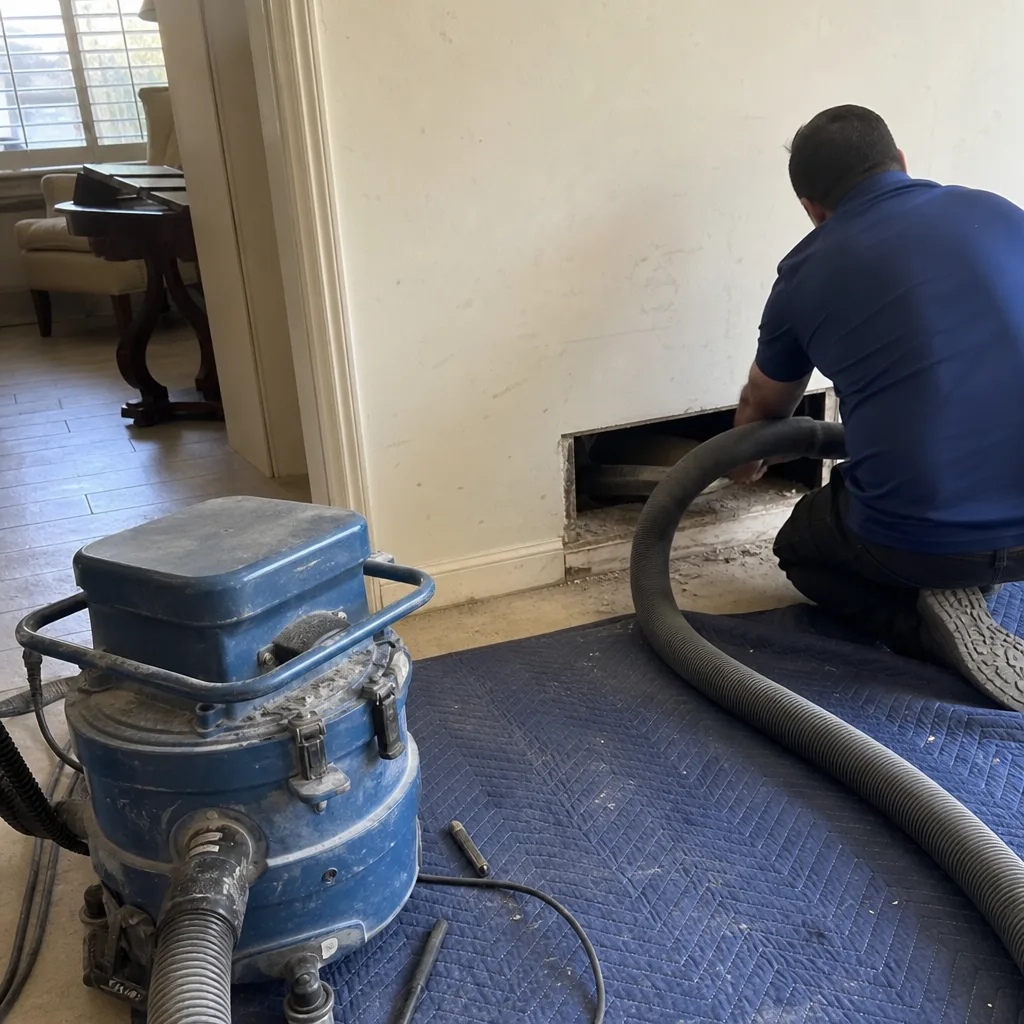
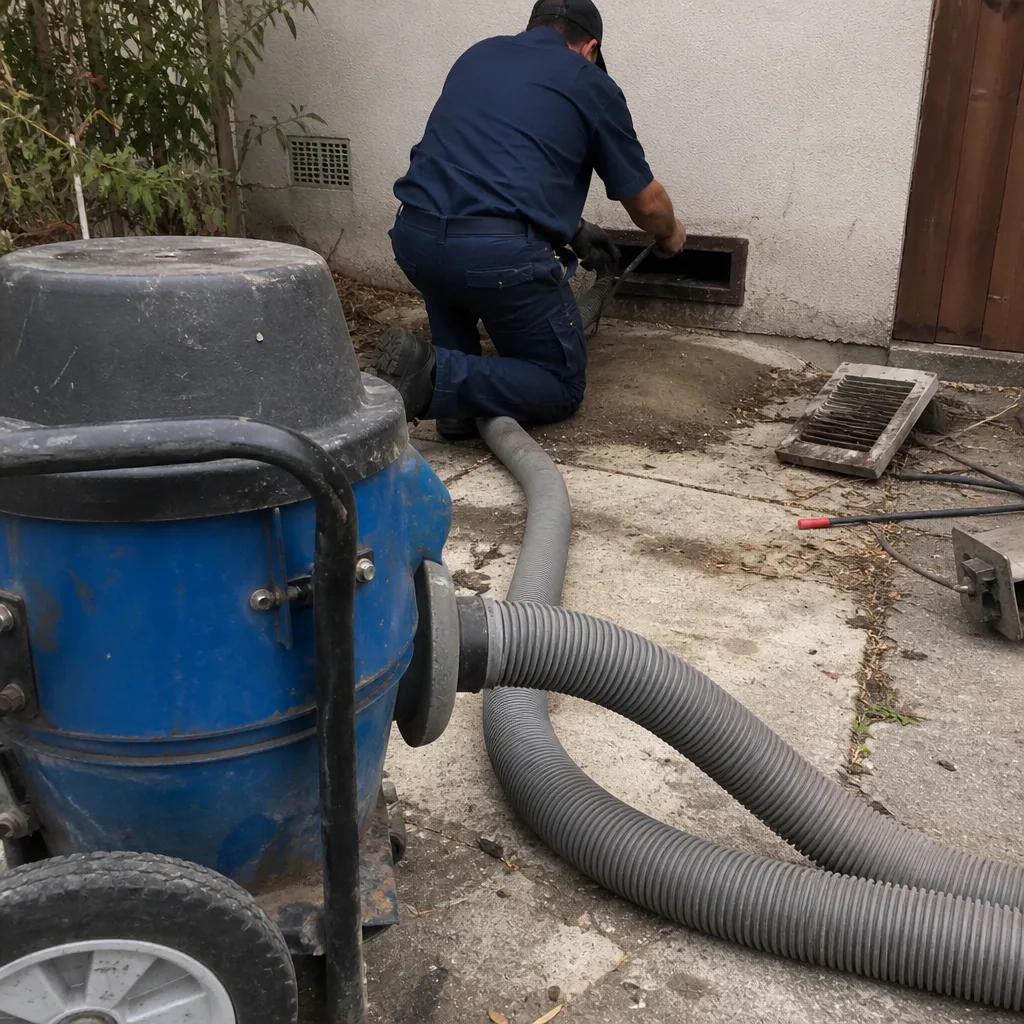
- Before-and-after photos. The system should produce images of your own duct interiors on your own job. Generic stock photos of someone else’s clean tell you nothing about yours.
- Filter status and recommendation. A filter should be new or verified clean at the end of a full-system service. If the filter is old, the clean won’t hold.
Ask the technician to walk you through the before-and-after photos at the end. Any company that performs this inspection with care will be able to do it in a few minutes, and it’s the single best way to know whether the work you paid for actually happened. If you want a look at the broader scope of services involved, our air duct cleaning page covers what a full-system service includes.
How to Read a Technician’s Scope of Work
Before anyone opens a panel, you should be able to answer one question: what’s actually being cleaned? A written scope of work is the document that tells you. Read it line by line before you sign. If it uses generic language, ask for the specifics in writing. The line items below are the ones that matter most.
Line items that indicate a full-system service
- “All supply and return branches included” or equivalent language naming both sides of the system.
- “Return plenum cleaned” as a stated item, not implied.
- “Air handler area cleaned” (with a note if the coil is being cleaned separately).
- Named equipment rather than a generic “vacuum.” Brands matter, because professional-grade systems are built for the job and consumer vacs aren’t.
- Sanitizing treatment as a stated line, and whether the product is applied after cleaning rather than during.
- Access point restoration explicitly promised in writing.
- Before-and-after photos included in the price, not an upsell.
Line items that suggest a blow-and-go job
- Pricing quoted per vent, with no total-system language at all.
- “Main trunk only” as the service boundary.
- Compressed air sweeps as the primary method, with no mention of containment.
- No inspection step listed after the clean.
- A coupon price that isn’t tied to a fixed scope, so the total can grow on the visit.
We work to one flat price per system, agreed in writing before work starts. It isn’t because flat pricing is easier for us to quote. It’s because per-vent pricing lets anyone start low and creep upward on the visit, and that’s the single biggest reason the duct cleaning industry has a trust problem. If you’re considering quotes from other companies alongside ours, ask each of them whether their price is fixed per system or per vent. The two pricing models produce different final invoices.
Duct Repair and Sealing: The Step Most Companies Skip
A duct system that leaks will undo a clean. That’s the plain version. Every gap at a joint, every disconnected run at a register collar, and every unsealed access point pulls air from the wrong place. That air carries dust into the system along with it. Cleaning removes what’s already there; sealing stops the inflow. Without both steps, the dust returns because the mechanism producing it never went away.
Most duct cleaning companies avoid sealing because it’s a separate skill set. It requires access to the duct interior, sealing materials rated for HVAC use, and a clear method for verifying the seal holds. We do both under one visit because a clean system that keeps leaking is a partial result.
Where leaks typically hide
- At the boot and register collars, where metal seams open slightly over time.
- In the main trunk where sections are joined.
- At access panels opened for service in the past and never fully sealed.
- At the air handler connection, a common leak point because it’s usually not inspected by anyone.
The sequence is straightforward. If we identify leaks during the clean, we seal them before reassembly. Cleaning, then sealing, then verification gives you a system that holds. And the next time you’re considering a clean, the depth of the new dust load tells you how much the sealing step actually did for you.
Dryer Vents and HVAC Cleaning: Same System, Different Jobs
One call can cover every part of the airflow in a home, but the parts are not interchangeable. Dryer vents handle a different airstream than HVAC ducts, and each has its own cleaning method. We treat them as separate services that happen to share equipment and skill, which is why so many homes benefit from scheduling them together.
dryer vent cleaning addresses one of the highest-load airstreams in any house. Lint builds up along the interior of the vent run, and catch points such as elbows, roof caps, and long horizontal runs collect most of it. The work involves introducing the brush or agitation tool from the laundry end while containing the exhaust so the lint does not dump into the laundry room.
HVAC cleaning addresses the mechanical heart of the system. The blower wheel, the evaporator coil, and the air handler cabinet collect debris that no register clean can reach. A dirty coil is also less efficient at transferring heat, which shows up as higher energy bills before it shows up anywhere else. Cleaning the air handler completes the work at the component where supply and return actually meet.
Why doing them in the same visit saves time later
When the duct cleaning happens first, the HVAC components downstream of the ducts start from a clean baseline. If the order reverses (HVAC first, ducts second), the newly cleaned coil catches the dust that comes loose during the duct work. That’s why we generally recommend ducts and HVAC in the same project, particularly when the system is old or has never been cleaned.
Indoor air quality upgrades follow the same logic. Because we integrate Aprilaire and Honeywell products, we can recommend and install filtration and humidity control equipment that keeps the system cleaner between services. Cleaning handles what’s already in the ducts. A better filter and air quality products handle what’s coming next.
Common Mistakes to Avoid
- Picking a quote by price alone. The lowest quote almost always reflects a smaller scope, not a better deal. Ask each company what’s included before you compare numbers.
- Letting the return side go untouched. If a company only cleans supply ducts, the return runs reload the system on the next heating cycle. The clean looks good for a month, then doesn’t.
- Not asking about containment. A shop vac with a single filter is not a containment system. Ask specifically how the vacuum captures fine particulates.
- Skipping the post-clean inspection. If the technician doesn’t verify airflow and reseal access panels, the job isn’t finished. Ask for the walk-through before they leave.
- Assuming a clean fixes the underlying problem. A leaky duct system will re-dirty itself. If no one checks for leaks and seals them, you’re on a repeat-cleaning cycle.
- Cleaning the ducts without touching the HVAC unit. The blower and coil area sit downstream of everything else. Skipping them means the dust those components hold feeds back into the newly cleaned ducts.
- Believing marketing copy over a written scope. A numbered list of what will happen on your property is the only reliable sign of what kind of job you’re buying.
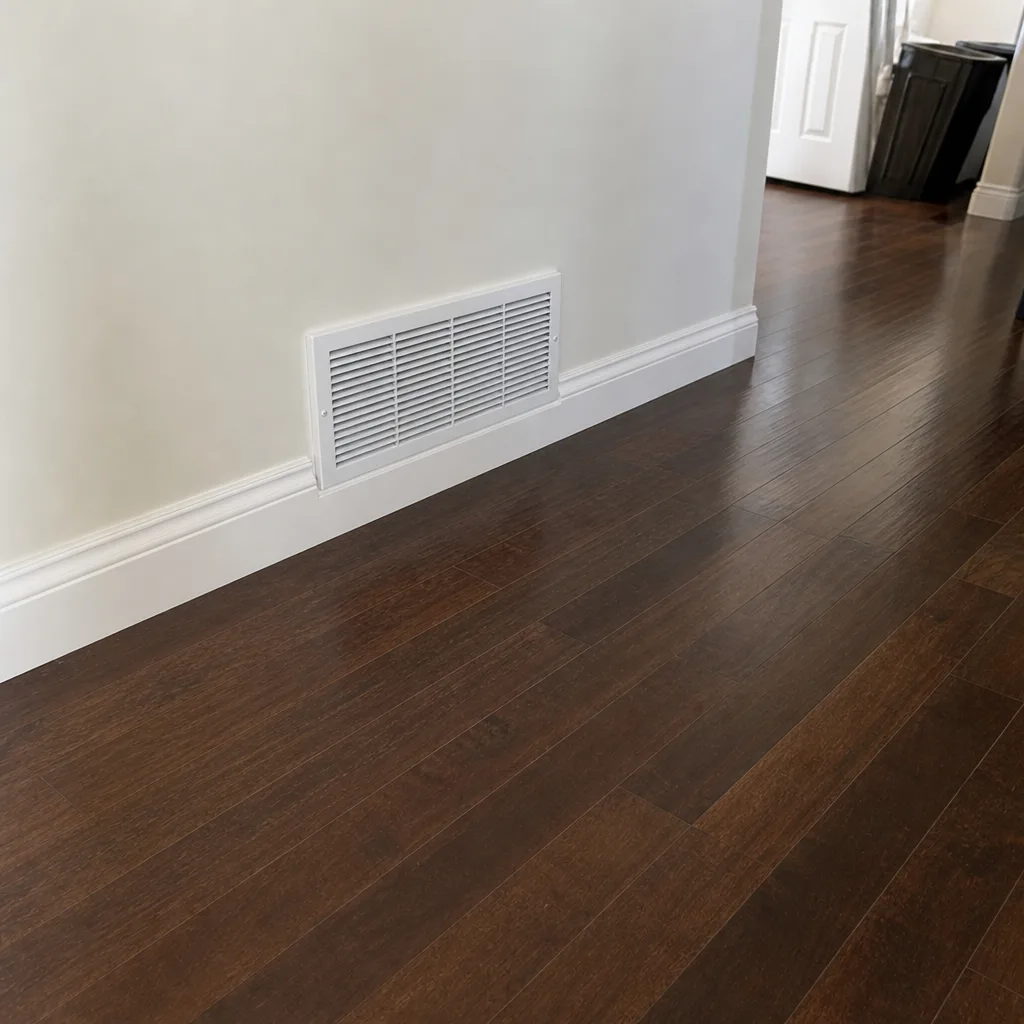
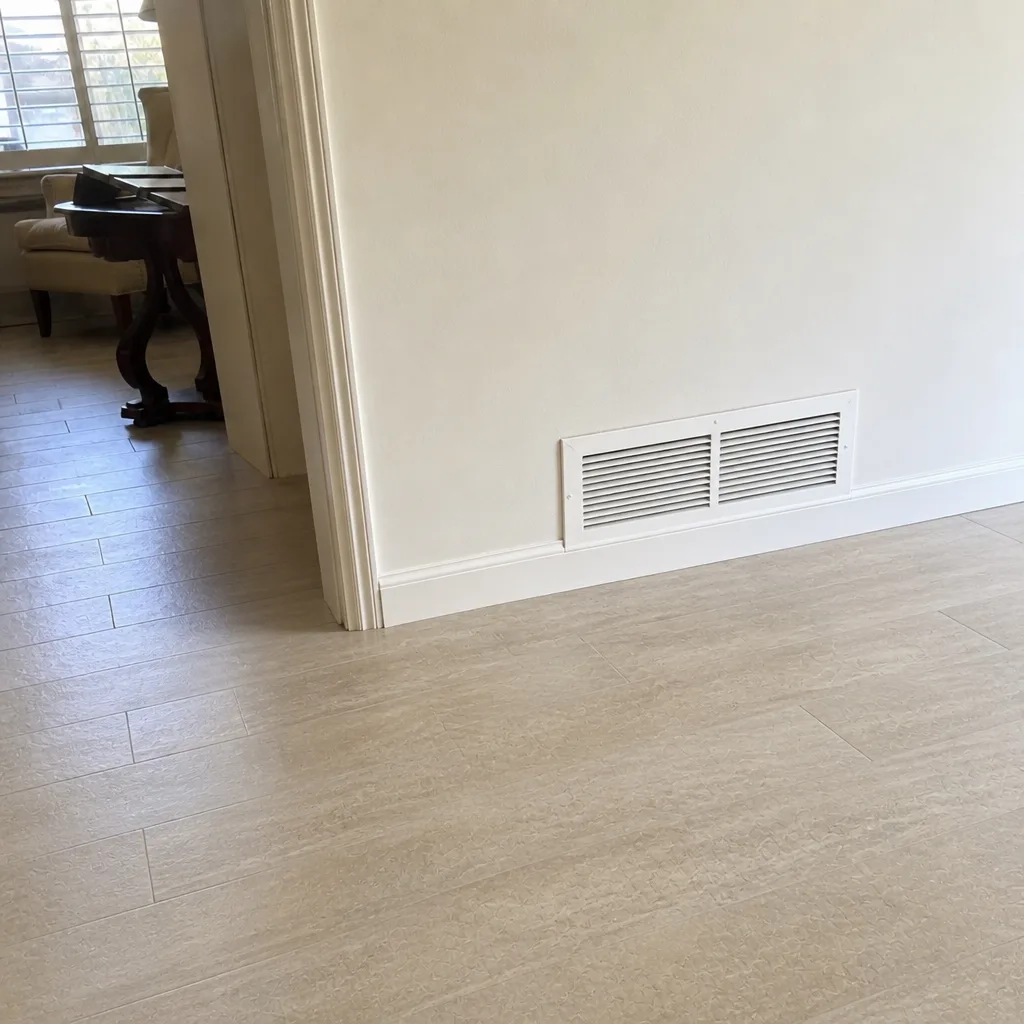
See the difference
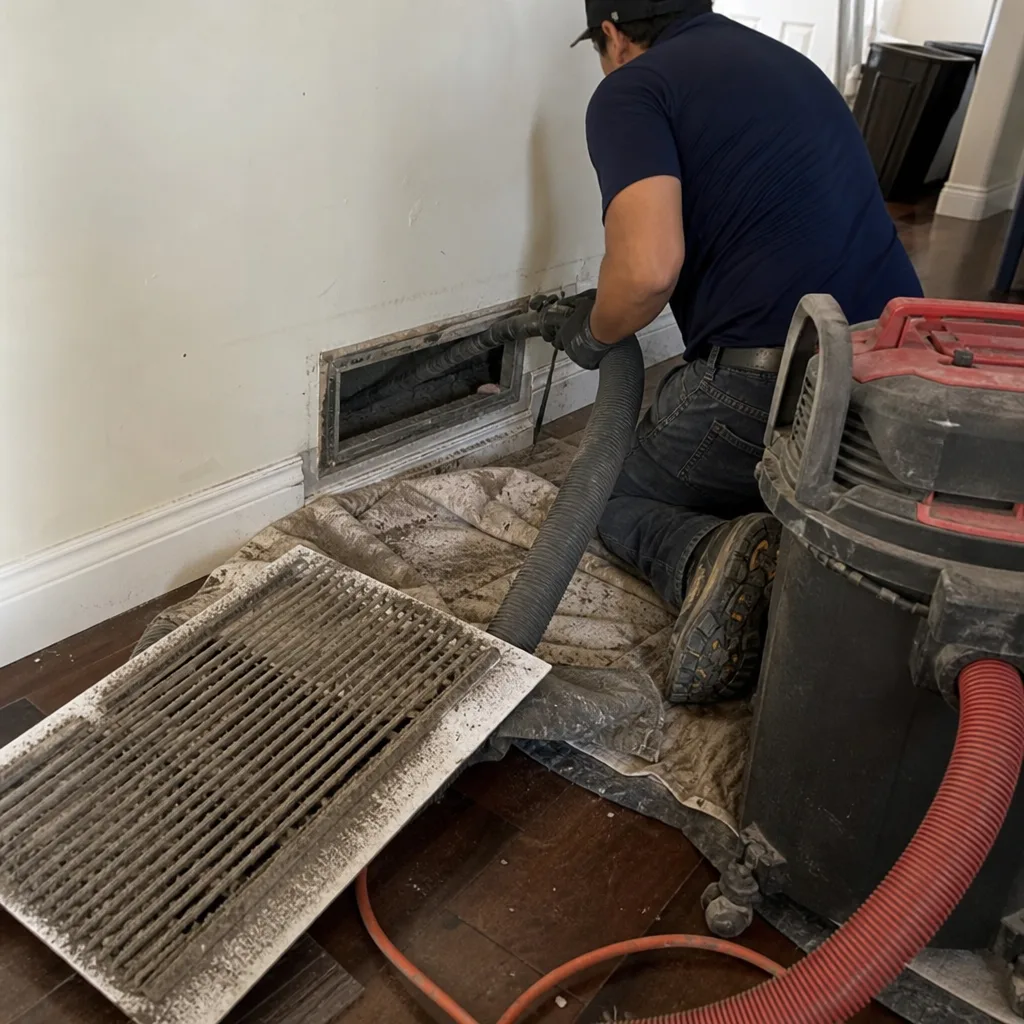 Before
 After
 Before
 After
 Before
 After
When to Call a Professional
Not every home needs duct cleaning. A house with a clean filter, good airflow, and no visible debris may simply need a filter change. Other situations call for professional work. Persistent dust on surfaces shortly after cleaning. A noticeable musty odor every time the HVAC starts. Allergy symptoms that track with the system running. Airflow that’s weaker at some registers than others. A dryer that takes two cycles to finish a normal load. Ducts that have never been cleaned in a home you’ve just bought. Any of those is a reasonable trigger for a professional evaluation.
If you’re considering a full-system service, Fountain Valley Air Duct Cleaning offers free estimates in Fountain Valley. Call (855) 658-3999. We answer 24/7, and a call outside dispatch hours is booked into the next opening, Sunday through Friday, 7am to 7pm. The estimate is free and the price is set per job by the written estimate before any work starts. We also serve surrounding Orange County communities. You can read more about who we are on our Fountain Valley Air Duct Cleaning page.
Frequently Asked Questions
Most full-system residential duct cleanings fall within a typical range for the region, and the final number depends on system size, the number of branches, and whether repair or sealing is needed. We quote one flat price per system, agreed in writing before work begins, so there’s no per-vent creep. Call (855) 658-3999 for an exact quote; estimates are free.
Cheaper quotes almost always reflect a smaller scope: supply only, no return plenum, no containment, or no inspection. The equipment and labor for a full-system clean cost more to deploy, and that’s reflected in the price. Ask each company to put its scope in writing, and compare what’s included rather than the bottom-line number. Call (855) 658-3999 and we’ll walk you through exactly what our quote includes.
You should see before-and-after photos of your own duct interiors, a walk-through of the resealed access points, and a verification that airflow at each register returned to expected levels. If a company can’t produce those at the end of the visit, that’s a warning sign. Call (855) 658-3999 to schedule a visit that includes all three.
Most homes do well on a clean every few years, not every year, and homes with good filtration, no pets, and tight seals can go longer. Homes with heavy dust, water intrusion history, or a previously unsealed duct system may need it sooner. The system itself, not a calendar rule, should drive the schedule. Call (855) 658-3999 if you’re unsure where you stand.
Clean ducts and a clean air handler help airflow and heat transfer, which is one factor among several in system efficiency, so we frame the benefit as expected rather than guaranteed. A dirty coil and restricted ductwork do increase the system’s workload. Cleaning restores the intended operating condition; other factors like insulation and equipment age still matter. Call (855) 658-3999 for an assessment of your specific system.
Both. Dryer vents, HVAC ducts, the air handler, and sanitizing treatments all fall under our scope, so one call covers every part of the airflow. We treat them as separate jobs performed with the same equipment and containment standard. Call (855) 658-3999 to schedule either or both.
The Bottom Line
A full-system duct clean isn’t a single tool or a single pass. It’s a sequence: containment first, then agitation, then extraction, then sanitizing, then verification, with sealing in between if the system has leaks. Fountain Valley homes tend to load up on fine particles in the return side, which makes the return plenum and the air handler the two areas most worth asking about when you compare quotes. The best way to separate a real service from a cheap one is to read the scope before you sign and to look for the return side by name. Professional-grade equipment, containment, and a written flat price are the three signs that matter most. Everything else is packaging.
Call (855) 658-3999 for a free estimate. We answer 24/7. Fast dispatch from 7am to 7pm, Sunday through Friday.
Written by the team at Fountain Valley Air Duct Cleaning.